
Download the current Android SDK Platform-Tools archive when you need adb and fastboot on Linux without installing the full Android Studio IDE. Google publishes the archive for Linux, and it contains the command-line tools that talk to an Android device.
Use this path when you need a stable folder for device debugging, sideloading, log capture, or bootloader work. The archive avoids mixing your tools with a distribution package that may update on a different schedule.
Choose the installation path
The standalone archive is the right default when you need the current tools from Android Developers. Android Studio is the better fit when you also need the SDK Manager, emulator, and build tooling.
| Your task | Use this option | What owns updates |
|---|---|---|
| Run adb or fastboot from a shell | Google Platform-Tools archive | Download and replace the archive |
| Build Android apps with an IDE | Android Studio | Android Studio SDK Manager |
| Use a distribution package for routine device commands | Your distribution repository | Your package manager |
Keep one installation path on your PATH. A second adb binary can make a device problem look like a version problem when your shell resolves a different command than the one you expected.
Download and extract Android SDK Platform-Tools
Create a directory under your home folder, download Google’s Linux archive, and extract it there. The archive creates a platform-tools directory that holds adb and fastboot.
mkdir -p "$HOME/Android"
cd "$HOME/Android"
curl -fLO https://dl.google.com/android/repository/platform-tools-latest-linux.zip
unzip platform-tools-latest-linux.zip
The download URL comes from the Platform-Tools release page. Leave the extracted directory name unchanged so the PATH command in the next step points at the same location.
The older Fedora capture below shows a repository installation. It still illustrates the terminal result you should expect after a package-manager install, but the archive path above keeps this tutorial tied to Google’s current Platform-Tools release.
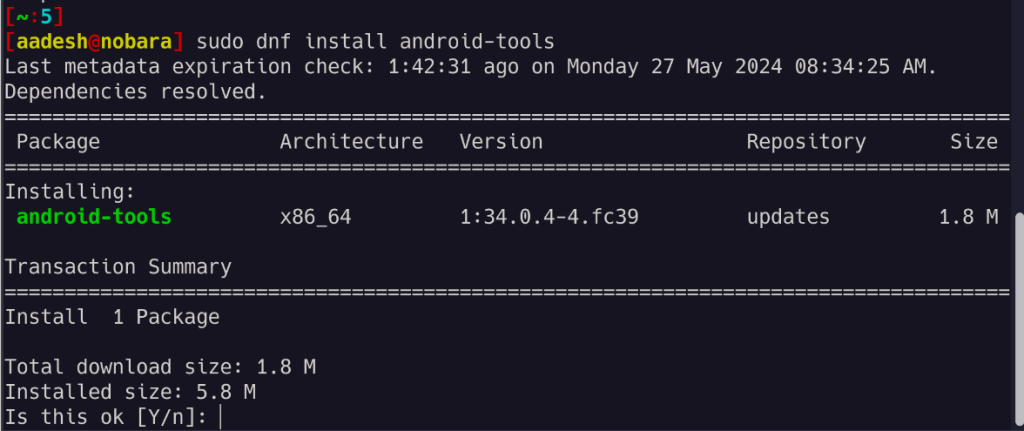
If you use your distribution package instead, verify that the installed adb version is the one you intend to use before adding another copy from the archive.
Add Platform-Tools to your PATH
Start by running adb with its full path. A version string confirms both the download and extraction location before you change shell configuration.
"$HOME/Android/platform-tools/adb" version
Add the directory to the PATH for login shells and load that configuration in the current terminal. Put the same export in the login configuration read by Zsh so a fresh terminal resolves the archive directory without a full command path.
printf '
export PATH="$HOME/Android/platform-tools:$PATH"
' >> ~/.profile
. ~/.profile
adb version
The screenshot below shows the same PATH task in an older shell profile workflow. Use the exact directory from your extraction location rather than copying a placeholder path.
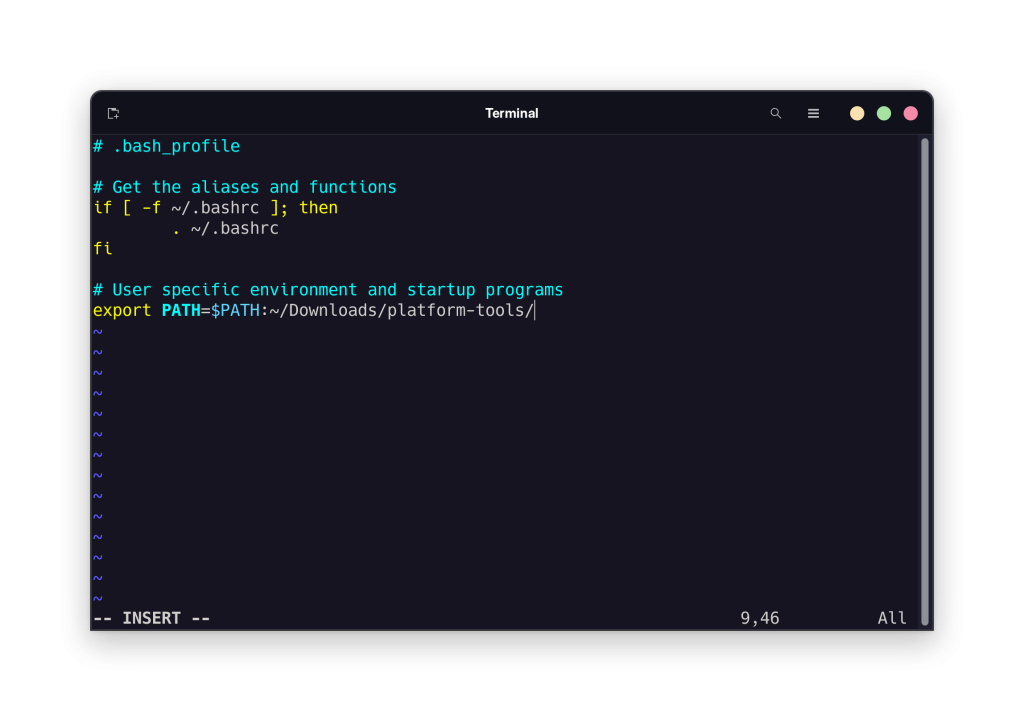
Close this terminal and open another one before you run adb version again. That check proves the startup file participates in a fresh shell session.
Connect a device and verify adb
Android Debug Bridge needs USB debugging enabled on the phone. Connect the device, accept its RSA fingerprint prompt, then list attached devices.
adb devices
A device line ending in device means adb can communicate with it. An unauthorized line means the phone still needs approval, and an empty list points to the cable, USB mode, permissions, or debugging setting.
Use Android file transfer over USB on Arch Linux when the connection works for charging but not for the workflow you need. For desktop integration instead of shell commands, GSConnect for Linux and Android keeps notifications and file sharing in the desktop session.
Use fastboot only for bootloader tasks
Fastboot is included in the same directory as adb, but it speaks to a device in bootloader mode. Device unlocking and firmware changes can erase data or fail on hardware that does not support the required bootloader mode.
fastboot devices
Check the device maker’s instructions before flashing or unlocking anything. OpenAndroidInstaller is useful when you need a guided custom-ROM workflow, while Universal Android Debloater Next Generation uses adb for a narrower app-removal task.
For screen control and capture after adb is working, scrcpy on Linux gives you a separate desktop workflow. Keep that tool separate from bootloader changes so you can identify which command changed device state.
Fix common Platform-Tools problems
Command not found means the platform-tools directory is absent from the startup file your shell reads. Run the full-path adb command again, then inspect the export line before editing more shell files.
- If adb devices is empty, unlock the phone, select a data-capable USB mode, and confirm USB debugging is enabled.
- If adb reports unauthorized, accept the fingerprint prompt on the phone, then rerun adb devices.
- If fastboot finds no device, reboot into the device’s documented bootloader mode and verify that the vendor supports fastboot.
- If you installed both a repository package and the archive, run command -v adb and keep only the path you plan to update.
Frequently asked questions
The archive path gives you current command-line tools without adding Android Studio. Device access still depends on the phone settings, USB connection, and bootloader policy.
Do I need Android Studio to use adb on Linux?
No. Android Studio installs Platform-Tools for app development, but the standalone Platform-Tools archive is enough when you need adb and fastboot from a shell.
Where should I extract Android Platform-Tools?
Extract the archive in a directory you control, such as your home directory. The commands in this tutorial use $HOME/Android so the PATH entry stays stable.
Why does adb say command not found after extraction?
Your shell cannot find the platform-tools directory. Run adb with its full path first, then add that directory to the startup file used by your shell.
Does fastboot work with every Android device?
Fastboot support depends on the device bootloader and vendor policy. Enable the required developer settings and follow the device documentation before changing firmware.
Run adb version in a new terminal before connecting a device. Once that command resolves to the directory you installed, you have a clean starting point for debugging, screen mirroring, or device maintenance.